Potato-as-Staple-Food Policy in China
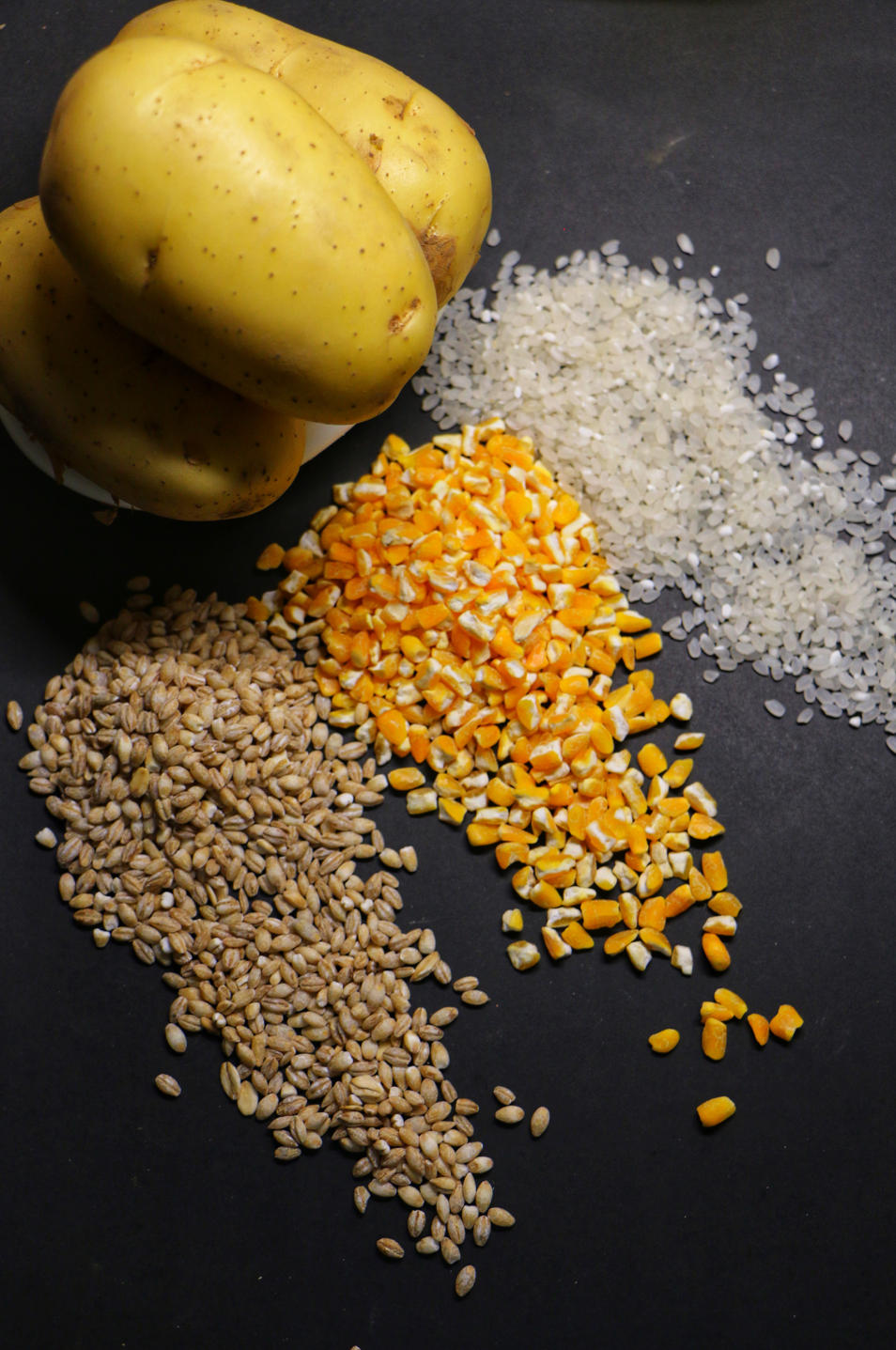
Promoting potato as staple food can reduce the carbon–land–water impacts of crops in China
Balancing food security with environmental impact mitigation represents a central challenge for sustainable agricultural development. Owing to its agronomic and nutritional advantages, China launched the Potato-as-Staple-Food Policy in 2015, aiming to cultivate improved varieties and expand planting areas to enhance national food security. A systematic assessment of the environmental implications of this strategy helps elucidate China’s potential contribution to synergizing global agricultural development and environmental sustainability.
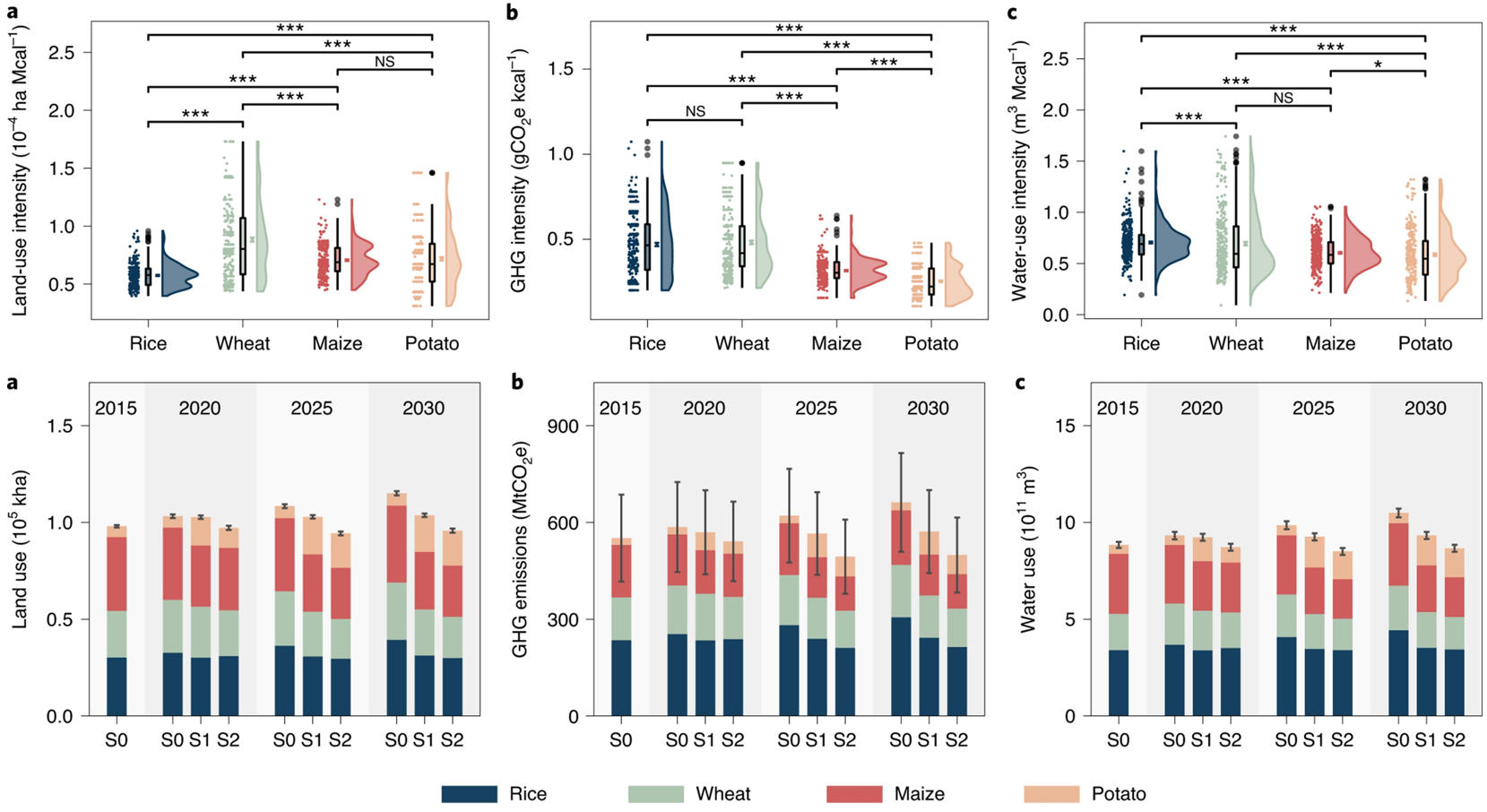
We develop a regionally differentiated life cycle assessment (LCA) framework for staple crops and find substantial spatial heterogeneity in environmental impacts across crop types and production regions. Under equivalent caloric supply, potatoes generate lower carbon emissions, water stress, and land-use pressure compared with other staple crops. Scenario analyses incorporating “policy implementation” and “production optimization” pathways suggest that by 2030, the Potato-as-Staple-Food Policy could reduce the environmental impacts of domestic staple crop production by 17-25% while meeting projected growth in food demand (Fig. 1).
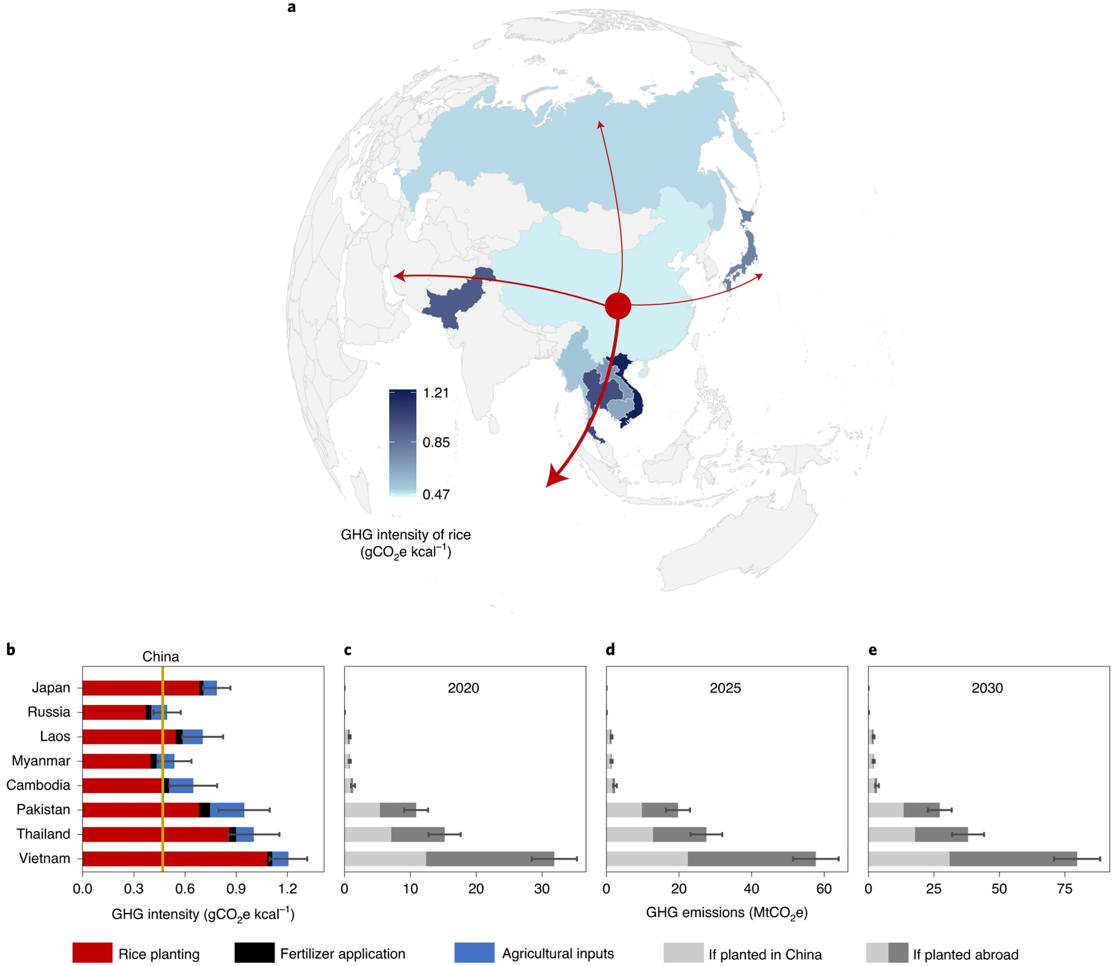
The study further highlights that realizing these environmental benefits critically depends on dietary shifts toward increased consumption of potato-based foods. Such transitions are non-trivial, particularly given the central role of rice in Chinese dietary culture. If domestic rice supply becomes relatively constrained, China may increase rice imports. Because the life-cycle carbon intensity of rice production in China is lower than in many other countries, expanded rice imports could induce carbon leakage through international trade. The associated emissions may potentially offset—or even exceed—the domestic mitigation gains achieved through the Potato-as-Staple-Food Policy (Fig. 2). Therefore, alongside adjustments in cropping structure, strengthening the potato food supply chain and facilitating dietary transitions are essential to ensure that structural agricultural transformation delivers net environmental benefits.
Cite this article:
Liu, B., Gu, W., Yang, Y. et al. Promoting potato as staple food can reduce the carbon–land–water impacts of crops in China. Nat Food 2, 570–577 (2021). https://doi.org/10.1038/s43016-021-00337-2